

RTA celebrates 20 years of shaping Dubai’s transport future
Study reveals the Authority added Dh156 billion to the city’s GDP

DUBAI – From a modest network of desert highways to one of the world’s most advanced mobility systems, Dubai’s journey over the last two decades has been nothing short of remarkable. At the heart of this transformation stands the Roads and Transport Authority (RTA), now marking 20 years of reshaping how the emirate moves, connects, and envisions its future.
Established in 2005 under the directives of His Highness Sheikh Mohammed bin Rashid Al Maktoum, Vice President and Prime Minister of the UAE and Ruler of Dubai, the RTA has been a driving force behind the city’s evolution into a global benchmark for smart, sustainable, and integrated transport.
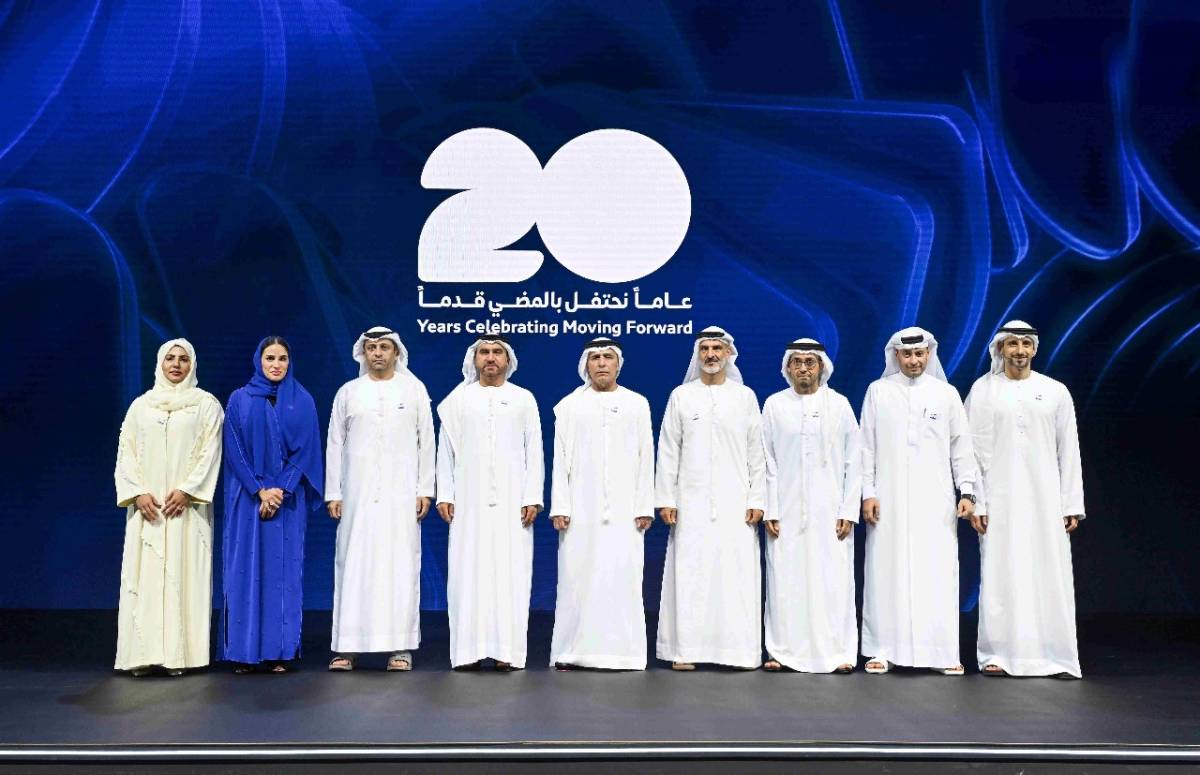
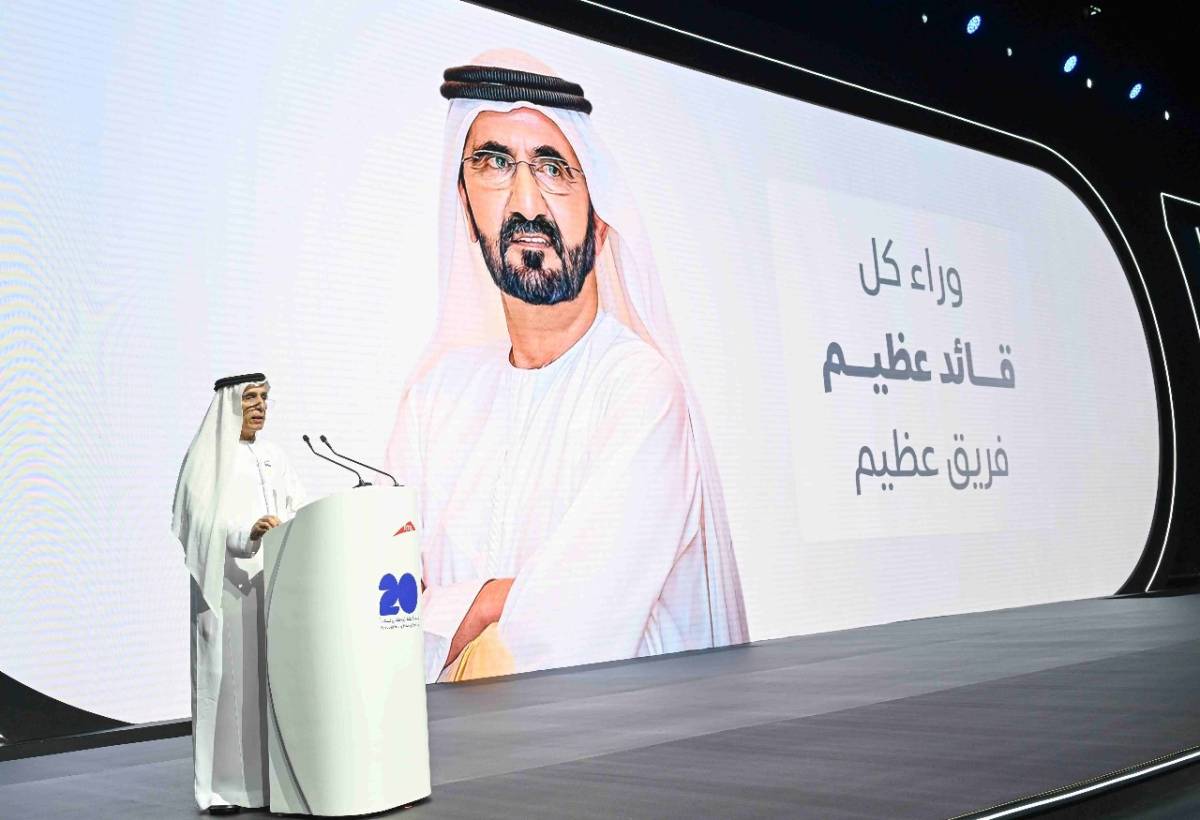
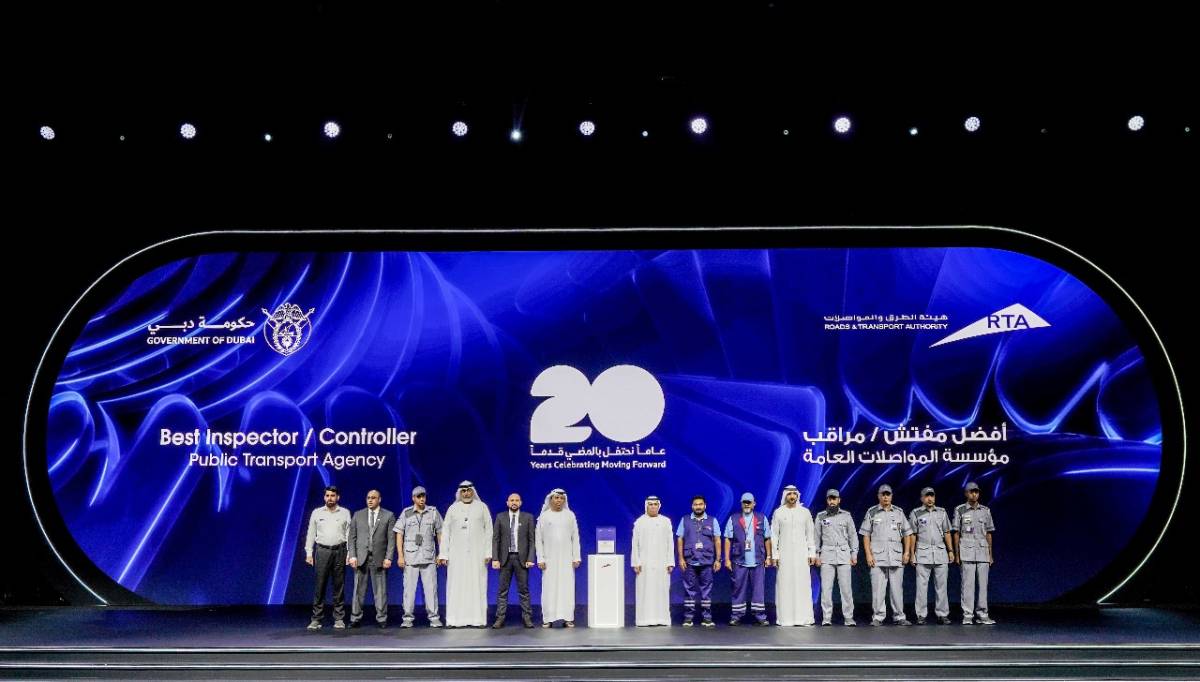
During a ceremony at Jumeirah Beach Hotel celebrating its 20th anniversary, Mattar Al Tayer, Director General and Chairman of the Board of Executive Directors, paid tribute to the leadership that made the transformation possible. “The RTA’s journey reflects the vision of His Highness Sheikh Mohammed bin Rashid, supported by His Highness Sheikh Hamdan bin Mohammed bin Rashid Al Maktoum, Crown Prince of Dubai, and Sheikh Maktoum bin Mohammed bin Rashid Al Maktoum, First Deputy Ruler of Dubai,” said Al Tayer. “It’s a journey of innovation, commitment, and people – the essence of Dubai’s success.”
Transforming Dubai’s mobility
When the RTA was founded, Dubai’s transport infrastructure was struggling to keep pace with its rapid urban and economic expansion. In 2006, the city had around 129 bridges and tunnels, 68 pedestrian crossings, and minimal public transport options. Two decades later, the change is staggering.
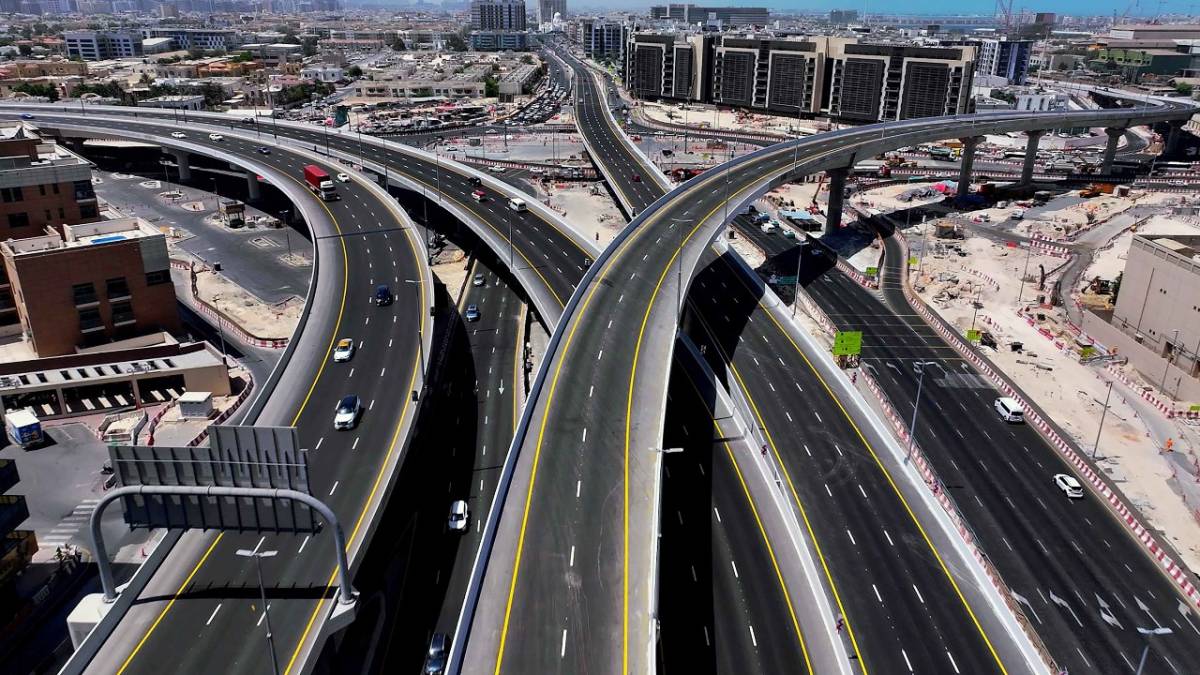
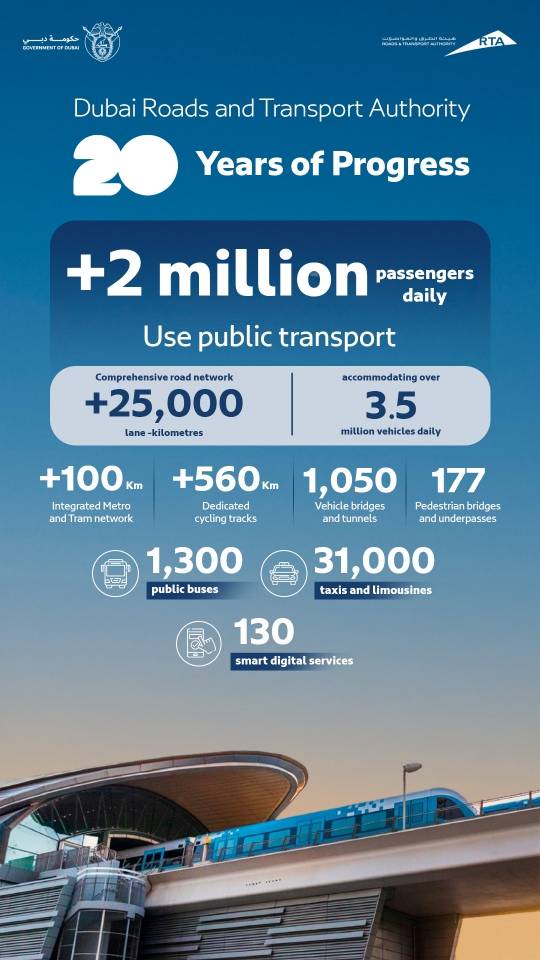
Dubai now boasts over 1,050 bridges and tunnels, 177 pedestrian crossings, and a vast 25,000-lane-kilometre road network. Public transport has evolved from a limited bus fleet into an integrated system connecting metro, tram, marine transport, taxis, and cycling paths.
The RTA’s flagship projects – the Dubai Metro, launched in 2009, and the Dubai Tram, opened in 2014 – have collectively revolutionised urban mobility. The metro now stretches over 90 kilometres across the city, transporting millions each month. Passenger journeys on all public transport have soared from 220 million in 2006 to more than 747 million in 2024, increasing the share of public transport usage from 6% to 21.6%.
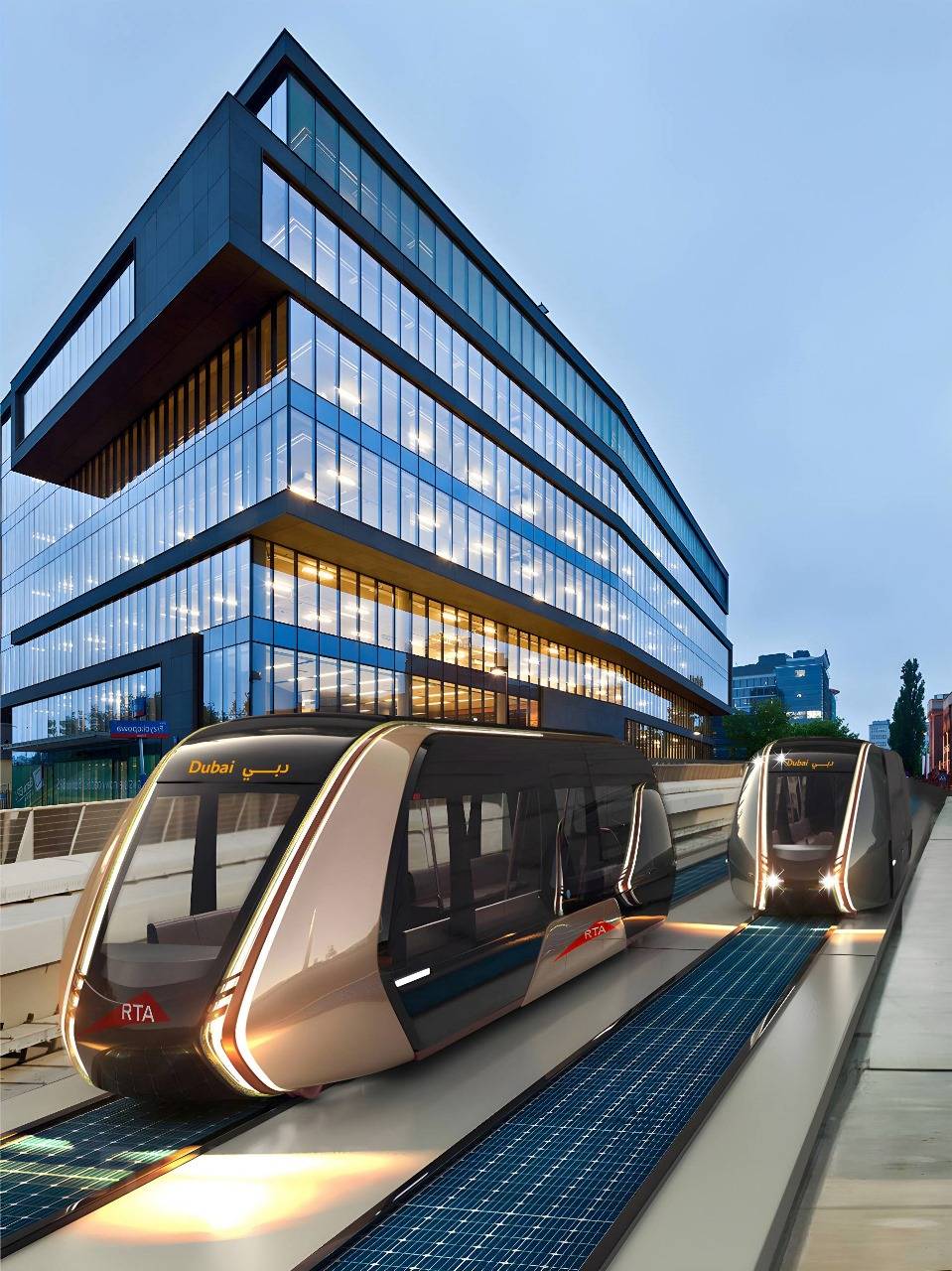
Cycling has also gained ground, with over 560 kilometres of dedicated tracks built to promote active and sustainable travel. The Authority’s integrated digital ecosystem now offers over 130 smart services, enabling seamless journeys via the RTA app, Nol card, and online platforms.
Economic impact and growth
A new study by McKinsey & Company underscores the RTA’s pivotal role in Dubai’s economy. Since 2005, its projects have contributed an estimated Dh156 billion to the emirate’s GDP, with cumulative revenues of Dh150 billion. By reducing time and fuel consumption, the RTA has helped save Dh319 billion in economic value, creating a measurable uplift in productivity and quality of life.
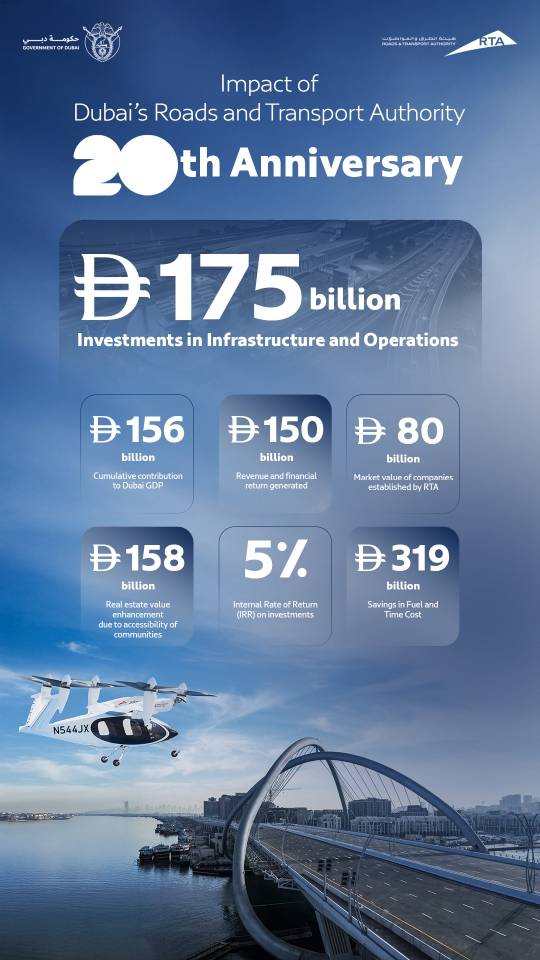
RTA-led developments have also fuelled the property sector, with improved transport access boosting real estate values between 6% and 16% – equivalent to nearly Dh158 billion in added economic worth.
Four of the Authority’s affiliated companies – Salik, Parkin, Dubai Taxi, and Mada Media – now represent a combined market capitalisation of more than Dh80 billion. Their listings on Dubai Financial Market generated Dh18 billion in proceeds, reinvested into future infrastructure and innovation projects.
According to the study, the RTA’s total returns could reach Dh254 billion by 2050, with an internal rate of return of up to 5%, ranking among the highest globally for public transport systems.
Future of flying mobility
As Dubai looks to the future, the RTA’s ambitions are taking to the skies. By 2026, the Authority will launch flying taxis in partnership with global partners, alongside the region’s first autonomous taxi service. These initiatives align with Dubai’s Smart City strategy and are expected to redefine the concept of personal and urban transport.
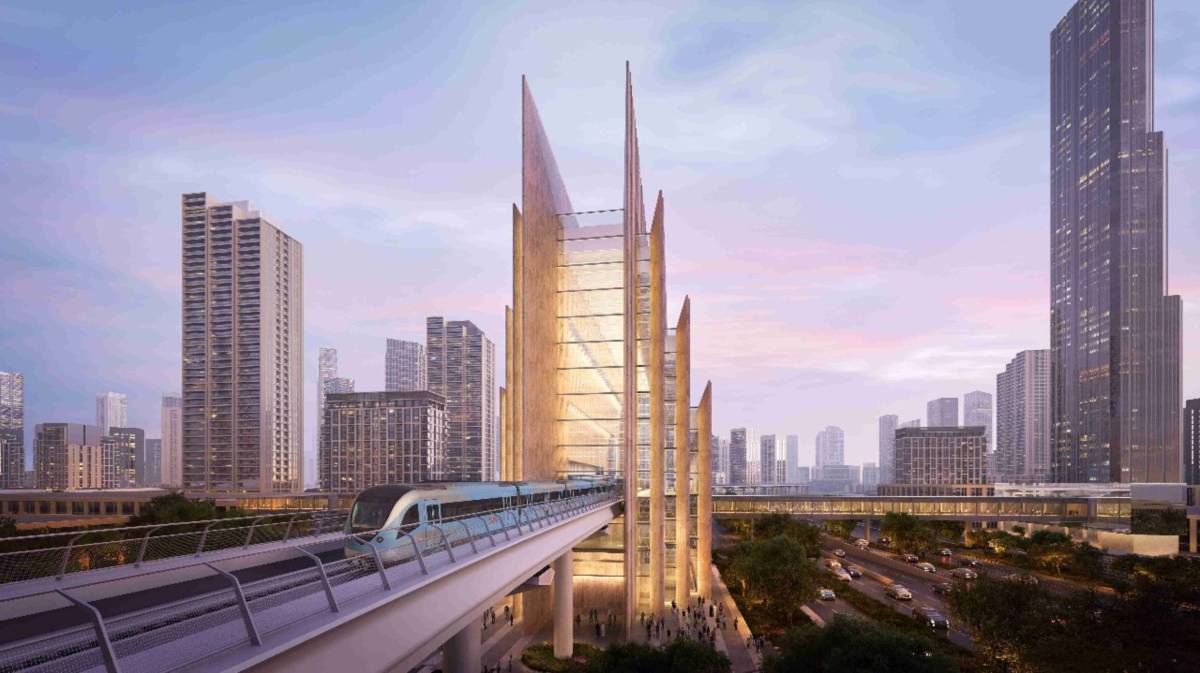
Meanwhile, construction has begun on the Dubai Metro Blue Line, a Dh18 billion project that will expand the city’s network by 30 kilometres and add 14 new stations by 2029. The line will serve key development corridors and communities expected to house more than one million residents by 2040.
Al Tayer described the upcoming phase as one of “sustainable innovation,” driven by clean technology and smart integration. Over the past fifteen years, RTA initiatives have already prevented more than 9.5 million tonnes of carbon dioxide emissions, a saving valued at billions of dirhams.
“Our goal is to make Dubai’s transport system not just efficient, but environmentally responsible and globally pioneering,” Al Tayer said. “With aerial taxis and autonomous mobility, we are entering a new era of movement – one that embodies Dubai’s forward-thinking spirit.”
Safety and quality of life
Dubai’s transport revolution has also delivered impressive gains in road safety. Traffic-related fatalities have dropped by 97%, from 21.9 deaths per 100,000 people in 2006 to just 1.8 in 2024 – a figure that now rivals some of the safest cities in Europe.
Enhanced road design, intelligent traffic management, and enforcement systems have played major roles in this success. The RTA’s use of artificial intelligence and predictive analytics has helped reduce congestion and improve emergency response times.
According to McKinsey’s study, Dubai’s Travel Time Index – a global benchmark for road efficiency – has improved from 1.28 to 1.23 in ten years. The average journey now takes 13.7 minutes per 10 kilometres, outperforming cities such as Sydney, Rome, and Berlin.
Beyond numbers, the RTA’s work has enhanced the city’s liveability. Shaded walkways, accessible metro stations, and pedestrian-friendly districts have made Dubai more connected and comfortable. These improvements also contribute to residents’ mental and social well-being by cutting commuting stress and encouraging active lifestyles.
Investment and innovation ecosystem
The RTA’s influence extends beyond infrastructure. It oversees and regulates over 16,000 transport and logistics companies, a sector that has expanded by 80% in five years. This thriving ecosystem has attracted Dh32.4 billion in foreign direct investment, with international players drawn by Dubai’s advanced infrastructure and open regulatory framework.
Home-grown innovations have also flourished. Dubai-based mobility platforms such as Careem, Yango, and iMile – together valued at over Dh22 billion – grew under an ecosystem shaped by RTA regulation and smart mobility policies. Start-ups and global investors alike view Dubai as a testbed for future technologies, from electric delivery fleets to hydrogen-powered buses.
The RTA continues to invest heavily in research, digital transformation, and artificial intelligence, including real-time traffic prediction, automated road maintenance, and smart parking systems. Through partnerships with universities and global tech firms, Dubai aims to stay at the cutting edge of mobility innovation.
A vision for the next 20 years
Looking ahead, the RTA is guided by five strategic pillars – innovation, sustainability, investment, talent, and partnership – to prepare Dubai for its next chapter of urban growth.
By 2040, Dubai expects its population to reach nearly six million, and the RTA is already planning to meet that demand through more integrated transport hubs, expanded cycling infrastructure, and zero-emission vehicles.
Al Tayer reaffirmed that the Authority’s role is not only to build infrastructure but also to shape lifestyles. “Transport is the pulse of a city,” he said. “Every road, bridge, and metro line tells a story of progress – and in Dubai, that story continues to inspire the world.”